
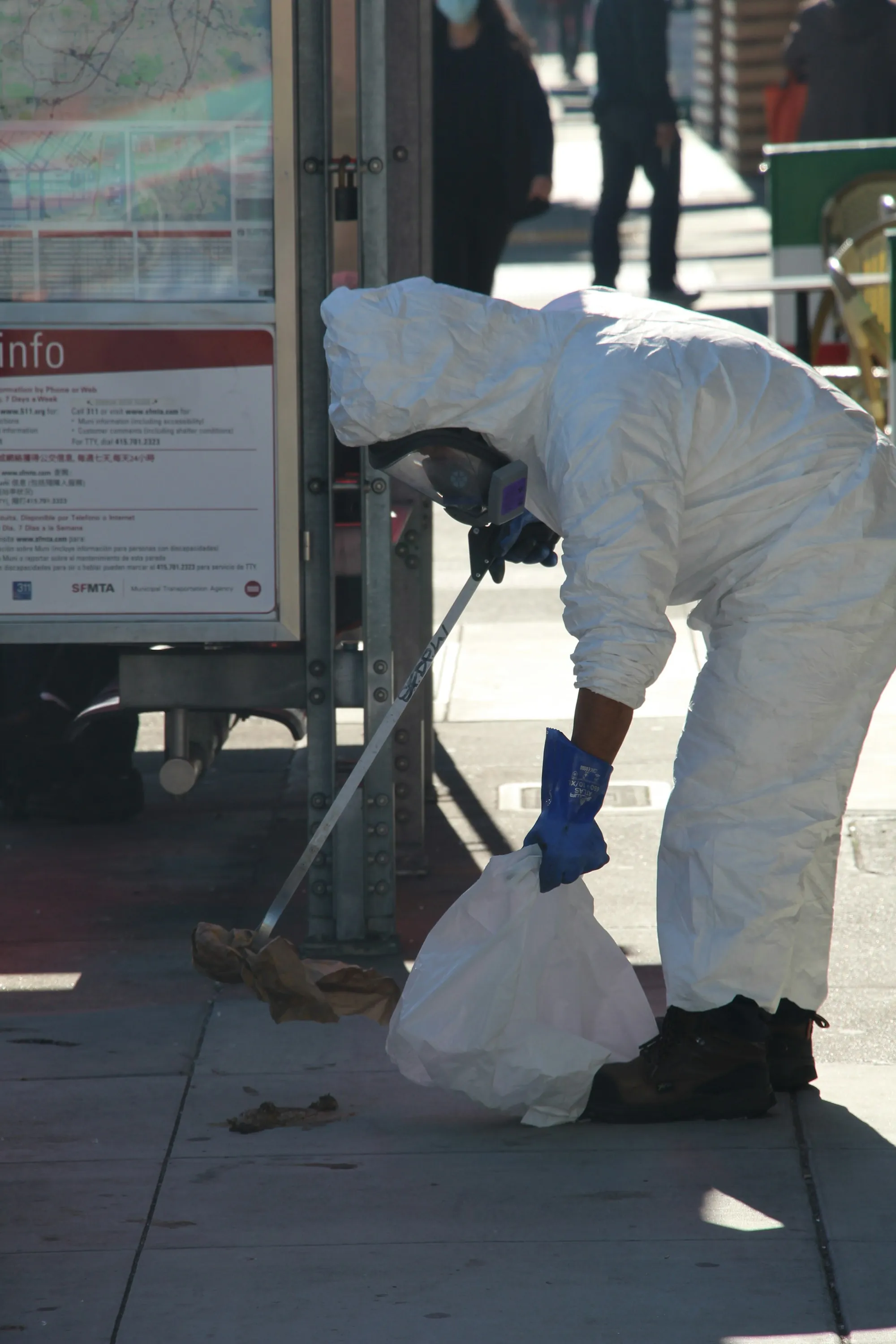
Removal of confirmed materials
Asbestos Removal on Staten Island
Each positive sample becomes a line on the scope. Each line comes out wet, sealed and cleared.
Remove What Tested Positive. Leave What Did Not.
A removal job should start with a lab report, not a hunch. Once the samples are back, the scope is simple to write: these materials, in these locations, come out. That might be the wrapped pipes and boiler jacket in a basement before a heating system replacement. It might be old vinyl floor tile and black mastic under a kitchen that is about to be gutted. Popcorn ceilings before a remodel, joint compound in walls that are coming down, cement siding shingles before new cladding goes on, duct wrap in a mechanical room. Each one has its own removal method, but the controls never change. The area is sealed with plastic and kept under HEPA negative air. The material is wetted so it does not shed fibers. It is bagged or wrapped, labeled and sealed. Surfaces get HEPA vacuumed and damp wiped, and nobody reoccupies the room until an outside air sample passes. On Staten Island, where many homes and garden apartments date from the decades when asbestos products were common, that sequence covers single rooms, whole basements and pre-sale or pre-demolition work alike. Because the borough is inside New York City, the job also follows DEP's asbestos rules on top of New York State's Industrial Code Rule 56.
What a Removal Job Covers
Every scope is different. These pieces show up on nearly all of them.
Scope tied to the lab report
Each material on the removal list matches a positive sample, so you can see why it is there.
Pipe and boiler insulation
Wrapped lines, elbow fittings and boiler jackets, often cleared ahead of a heating system swap.
Floor tile and black mastic
Tile lifted wet and the adhesive dealt with, so new flooring can go down on a clean surface.
Ceilings and walls
Popcorn and textured ceilings and joint compound removed with the room fully contained.
Siding, roofing and duct wrap
Cement shingles taken off whole where possible, wetted and wrapped. Duct wrap bagged at the source.
Containment and negative air
Poly enclosure, taped seams and a HEPA machine drawing air inward for the duration.
Required notifications
State and DEP project notifications prepared when the job size calls for them.
Clearance and disposal
An outside air test before you move back in. Bags hauled to a permitted site, paperwork filed away.
How the Removal Runs
Confirm and scope
Existing lab results are reviewed, or suspect materials are sampled first. The positive materials become the written scope, with the price, the containment plan and any filings listed alongside.
Seal and remove
The work area is enclosed and put under negative air. Handlers mist each piece before it is pried loose, then double-bag or wrap it and tag it for disposal.
Clean, sample, return
Surfaces are HEPA vacuumed and damp wiped. Then a third-party tester checks the air. A pass, and only a pass, unseals the enclosure and gives the room back.
Why the Method Matters
You pay for positives only
Materials that tested negative stay off the scope. That keeps the job and the bill to what is actually asbestos.
Dust stays contained
With the enclosure under negative pressure, airborne fibers have one exit: the HEPA filter.
Proof at the end
An independent clearance result, not just a crew saying it looks clean.
- Lab-based scope
- HEPA negative air
- Wet removal methods
- Independent clearance
Have Lab Results, or Need Them?
Either way the next step is a conversation about what was found and where. We will lay out the scope, the containment and what clearance looks like.